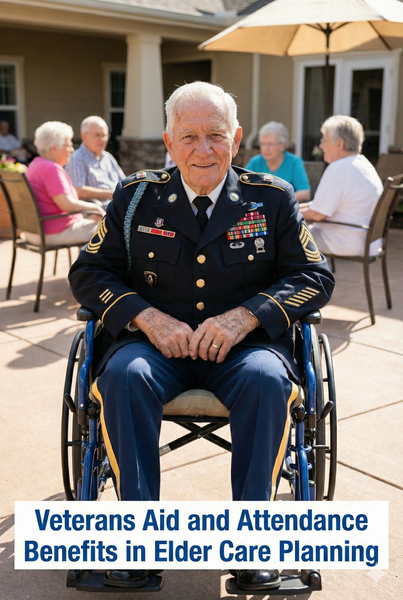
The Role of Veterans Aid and Attendance Benefits in Elder Care Planning
A Special Pension Benefit to Help Pay for Long-Term Care for Veterans
Facing the reality of aging loved ones is never simple, especially as care needs increase. Too often, families are shocked by the staggering cost of home care, assisted living, or nursing facilities. What many don’t realize is that valuable
benefits may be available to help — specifically, Veterans Aid and Attendance. These benefits have the potential to greatly reduce the financial pressure on families while ensuring quality care for the veterans who so bravely served our country.
What Are Aid and Attendance Benefits?
The Veterans Aid and Attendance benefit is a monthly payment paid by the Department of Veterans Affairs in addition to a standard VA pension. It’s designed for veterans and surviving
spouses who need help with activities of daily living — such as bathing, dressing, or eating— at home, in assisted living, or in a nursing facility. Those who qualify can receive thousands of dollars per year to help cover these expenses— sometimes the difference between keeping a loved one at home or facing institutional care before they’re ready.
Eligibility requirements are specific and sometimes confusing, but typically include:
- Veteran status, with at least 90
days of active service and one day during wartime
- Medical need for assistance with daily living tasks
- Financial need, with asset and income limits
- Proof that care is needed and being provided
How Do These Benefits Fit Into a Solid Care Plan?
Veterans Aid and Attendance isn’t the only tool to have in your elder care toolkit — it should be combined with smart, proactive planning for the best results. Many families discover that integrating Veterans
benefits with Medicaid Asset Protection and other estate planning solutions is the optimal route.
For example, our Living Trust Plus® Veterans Asset Protection Trust System is specifically designed to help veterans or their surviving spouses protect family
resources, qualify for Veterans Aid and Attendance and Medicaid benefits, and preserve peace of mind for everyone involved. By using these trusts strategically, you can meet asset requirements for both Aid and Attendance and Medicaid without impoverishing yourself or risking your home in the process.
Avoid Common Pitfalls: Why Expert Guidance Matters
The rules for Aid and Attendance benefits are detailed, and getting them wrong can create significant delays or outright denials.
Mistakes like gifting assets the wrong way, failing to document the need for care, or misunderstanding the interplay with Medicaid can sabotage your plan.
Working with experienced elder law professionals is crucial. Our team has helped countless families across the DMV navigate the Aid and Attendance
application process and build comprehensive plans that stand the test of time. Every step, from asset protection to benefit coordination, is handled with precision and compassion — so you can focus on your loved one, not on paperwork.
Combining VA and Medicaid Benefits for Maximum Support
One of the strengths of our approach is knowing that most veterans can qualify for Aid and Attendance first, when lower levels of care are needed, and then transition to Medicaid if care needs
increase to the nursing home level of care. These benefits are not mutually exclusive. Planning ahead allows you to receive the VA’s monthly support until more extensive care is needed — at which point, with proper trust planning in place, Medicaid can take over most or all of the cost without a catastrophic impact on family finances.
Concrete Steps You Can Take Right Now
- Assess your or your loved one's military service. Find out if you or your loved one
served at least 90 days active duty and one day during wartime by getting a hold the DD-214 Discharge document.
- Organize and document care needs. Whether care is being provided at home or in a facility, detailed records make a difference.
- Learn how asset protection trusts can help. Explore Living Trust Plus® options for safeguarding your home and savings.
- Start the conversation with an elder law attorney now — before resources are depleted or a care crisis hits.
For deeper insights, explore our dedicated section on veterans benefits, or dig into decades of advice on our Everything Elder Law Blog for the latest updates on legal rights, planning strategies, and real client stories.
Don’t Wait for a Crisis—Be Proactive, Prepared, and Protected
Making decisions under pressure—after funds run low or a parent can no longer live safely at home—is the hardest way to solve your family’s care challenges. The best outcomes come from working
with a knowledgeable attorney, considering all options, and making your wishes official before the need is urgent.